Aller au contenu principal

Innovation pédagogique

Automated L2 Speaking Assessment (AL2SA) International Workshop 2026

Conférence, Rencontre / Débat Innovation, Innovation pédagogique, Recherche, Séminaire transversal Du 5 mars 2026 au 6 mars 2026
Complément date

9:00 - 18:00

Saint-Martin-d'Hères - Domaine universitaire

Complément lieu

Salle Jacques Cartier at the Maison des Langues
1141 Avenue Centrale, 38400 Saint-Martin-d'Hères, France

Recent advances in artificial intelligence, particularly multimodal language models, are opening unprecedented opportunities for automated assessment of speaking skills in second language learning. Yet fundamental questions remain: What exactly should we assess in L2 oral production? How can technology best serve valid, reliable, and ethical assessment practices?

The AL2SA workshop (pron. /ˈæl.tsə/) brings together international experts to address these critical issues. Over two days, we will explore the theoretical foundations, methodological challenges, and practical applications of automated speaking assessment, balancing technological innovation with pedagogical and psychometric rigor.


Key Information

  • Dates: March 5-6, 2026

  • Format: Hybrid (on-site + Zoom)

  • Venue: Salle Jacques Cartier, Maison des Langues et des Cultures, Université Grenoble Alpes

  • Registration: Free and open to everyone – registration needed

  • Lunch registration deadline: February 20, 2026

>> Register here! <<

Organized by: UGA's Language Skills Assessment Unit (Cellule d'évaluation des compétences en langues, Service des Langues) in partnership with LIDILEM and LIG laboratories, UGA's Language Center and the Multidisciplinary Institue in Artificial Intelligence (MIAI).


Practical Information

📍 Venue & Access

Salle Jacques Cartier
Maison des Langues et des Cultures
Université Grenoble Alpes
1141 Avenue Centrale, 38400 Saint-Martin-d'Hères, France

  • From Grenoble train station: Take Tram B (25 min) to Bibliothèques Universitaires (Direction: Gières Plaine des Sports)

  • From Gières Gare – Université station: Take Tram B (5 min) to Bibliothèques Universitaires (Direction: Oxford)

🌍 Remote Participation

Join via Zoom: https://univ-grenoble-alpes-fr.zoom.us/j/94720156701?pwd=Zyhi1WuR3UxAuaa2be5hPyq8bowJmT.1


Program

THURSDAY, MARCH 5TH

9:00-9:15 OPENING (Alice Henderson, Univ. Grenoble Alpes, France)

Session n°1: Assessing speaking skills

9:20-9:50 Linda Terrier & Lionel Fontan 
Univ. Toulouse Jean-Jaurès, France
Archean Labs, France
linda.terrieratuniv-tlse2.fr (Slides upon request (work in progress))

The measurement of intelligibility has become a cornerstone of L2 speech assessment, whether human or automated. However, this construct, which seems obvious and stable at first glance from Munro and Derwing's 1995 seminal definition (“the extent to which a speaker's message is understood by a listener”), proves to be much more complex when we look at the concrete methods used to evaluate it. Like listening comprehension, intelligibility can only be measured indirectly, which systematically raises two fundamental questions: what exactly is being measured through the proposed elicitation task, and through the chosen evaluation method?

This impossibility of direct access to a listener’s understanding—and thus to the speaker’s intelligibility—renders any measurement of intelligibility fundamentally problematic and complex. Our recent scoping review (Terrier et al., under review) has further revealed a wide diversity of elicitation tasks and methods used to assess intelligibility. Sound identification, orthographic transcription, keyword spotting, subjective ratings, comprehension questions… each modality engages the listener at different levels of processing, resulting in the measurement of partially distinct constructs.

In the first part of this presentation, Linda Terrier will situate the construct of intelligibility within the broader framework of listening comprehension, by analyzing several assessment modalities from the perspective of the Kintsch & van Dijk model of comprehension (1998), which distinguishes between low- and high-levels of comprehension through the construction of the microstructure, macrostructure, and situation model of the message at hand.

To concretely illustrate these issues, Lionel Fontan will then present an example of a recently developed task: oral translation of short sentences. This type of task provides a semantic reference for the message the learner wishes to convey, while allowing flexibility in the linguistic form. Lionel Fontan has used this task to investigate the external validity of subjective intelligibility ratings, and to analyze the bias introduced by the absence of a reference for listeners.

Ultimately, because of the inherent complexity of intelligibility in L2 speech, we argue that any approach to its assessment—especially automated assessment—must begin by explicitly stating what aspect of intelligibility is being measured and through which task.

9:50-10:20 Nivja de Jong
Leiden Univ., the Netherlands
View presentation slides

In current classrooms, among the second language (L2) skills, practicing and assessing speaking are often neglected. Its loud and transient nature makes it hard for teachers to provide individualized feedback, and assessing speech recordings is highly time-consuming. Automated speaking assessment can help address these issues. In this presentation (based on De Jong et al., 2025), I first define speaking as a skill and outline the requirements for high-quality, practical, and ethical tools for automated scoring and feedback. Then, drawing on the AI-based assessment framework (Fang et al., 2023) and an educational design perspective, I propose recommendations on how computational linguists, educators, and assessment practitioners can join forces to develop automated systems that are technically sound, ethically responsible, and likely to be adopted in educational practice.

References

De Jong, N. H., Raaijmakers, S., & Tigelaar, D. (2025). Developing high-quality, practical, and ethical automated L2 speaking assessments. System, 134, 103796. https://doi.org/10.1016/j.system.2025.103796

Fang, Y., Roscoe, R. D., & McNamara, D. S. (2023). Artificial intelligence-based assessment in education. In B. Du Boulay, A. Mitrovic, & K. Yacef (Eds.), Handbook of Artificial Intelligence in Education (pp. 485–504). Edward Elgar Publishing. https://doi.org/10.4337/9781800375413.00033

10:20-11:00 Discussion

11:00-11:30 ☕ BREAK ☕

Session n°2: Listening Disfluency

11:30-12:10 Nobuaki Minematsu
Univ. of Tokyo, Japan
View presentation slides

Measuring, Analyzing, and Predicting Listening Disfluency of Learners and Raters: Using Speech and AI Technologies for Automated Assessment

Every learner aims to become easy to understand in L2 speech communication, yet their unique pronunciation may sometimes hinder this goal. Listening is a mental process that is difficult to observe directly, which is one reason learners often feel anxious about how smoothly they are understood. How can we measure listening disfluency? Do we need expensive brain-sensing techniques to quantify it?

In this talk, we present a pedagogically valid and practical method for measuring listening disfluency. Shadowing is an immediate reproduction of presented speech with a short delay, in which listeners repeat what they hear in their own accent. When listeners experience perceptual difficulty, their shadowed reproduction breaks down, revealing points at which cognitive processing load increases. By analyzing these disruptions, we can capture dynamic properties of listening disfluency.

We then demonstrate two applications of this measured disfluency. The first is visualizing global communicability, which represents how easily individual learners from around the world understand others and how easily they are understood in return. The second is the development of a virtual shadowing rater, built by collecting a human rater’s shadowing data for L2 English and using it to model intelligibility-based L2 speech assessment.

Keywords:

listening disfluency, shadowing-based assessment, L2 intelligibility, global communicability

12:10-12:30 Noriko Nakanishi (online)
Kobe Gakuin Univ., Japan
Slides for participants only

While AI-based tools provide useful automated assessments of L2 fluency, they cannot fully replicate the socio-emotional dynamics of actual human communication. This presentation introduces the Shadowing Exchange Community, a peer-to-peer program that utilizes AI technology not as a final goal, but as a scaffolding device to enhance human-to-human interaction.

In this program, participants record 30-second speeches in both English and Japanese. During this process, they are presented with immediate Automatic Speech Recognition (ASR) results, allowing them to verify intelligibility—at least to the system—and re-record as needed before engaging with other learners. This ensures that AI serves to prepare participants for the community's core activity: a reciprocal exchange where learners from diverse backgrounds shadow each other and provide mutual feedback.

Crucially, the program is designed to enhance cross-cultural sensitivity and communication skills, with a specific focus on how to provide supportive feedback. This approach is structured around three key goals:

1. Practicing listening to various accents.
2. Checking one's own intelligibility with speakers of other L1s.
3. Learning to give constructive, respectful, and supportive feedback.

This cyclical, community-based model offers valuable insights into the social, emotional, and intercultural dimensions of language learning. As of November 2025, the program has engaged approximately 180 participants, including English L1 speakers (~70), Japanese L1 speakers (~60), and others (~50). 

This presentation will share the program's structure and discuss preliminary findings on its impact on learners' metalinguistic awareness and affective filter.

Keywords: Shadowing, Peer Feedback, Cross-Cultural Communication, AI Scaffolding, Socio-Emotional Learning

12:30-13:00 Discussion

13:00-14:30 🍴 LUNCH 🍴 (Provided, please register)

Session n°3: Teachers' Open Session

14:30-15:30 Beata Walesiak
unpolish.pl, Poland
Slides for participants only

In this talk, educators will learn about the pedagogical use of commercially-available pronunciation and speech coaching apps, with a focus on the features and functionalities they include and the way they can be integrated into teaching and learning practices (in classroom instruction and in learners’ self-study). At the same time, the talk will critically examine common promises made by app developers, such as efficiency or judgement-free feedback, and discuss app limitations as well as implications of positioning AI as an authoritative evaluator of learner performance. The aim of the session is to help teachers make informed, context-sensitive choices when using the apps in pedagogy.

Bio
Beata Walesiak is a lecturer for Open University at University of Warsaw (UOUW) and Language Science and Technology (LST) at the Institute of Applied Linguistics at University of Warsaw, Poland. She’s also a teacher trainer, linguist and researcher with unpolish.pl. She has cooperated with a number of schools, academic institutions and start-ups within the domain of educational technologies, mobile and computer assisted pronunciation training, and AI-based speech pedagogy and assessment. She is also a dedicated IATEFL Pronunciation Special Interest Group (PronSIG) Committee member.

15:30-16:00 Sylvain Coulange, Pinxun Huang & Eli Stafford
Univ. Grenoble Alpes, France
Univ. Lorraine, France, 
Univ. Paris Cité, France
View presentation slides

This talk presents the development of an automated speaking assessment module for SELF, the online language placement test at Université Grenoble Alpes (https://self.univ-grenoble-alpes.fr/english/). The project, known as SELF Production Orale (SELF PO), is a collaborative effort between the Laboratoire de Linguistique et Didactique des Langues Étrangères et Maternelles (LIDILEM) and the Laboratoire d'Informatique de Grenoble (LIG). Two speaking modules are currently under development: one for English and one for French, with the French module developed in partnership with CUEF and ADCUEFE.

This talk will focus on the English speaking module, covering the development phases, an overview of the speaking tasks and assessment criteria, and preliminary results. We will conclude with a discussion of the key challenges and limitations encountered in implementing automated speaking assessment at scale, offering insights for institutions pursuing similar initiatives.

16:00-16:30 Discussion

16:30-17:30 ☕ SOCIAL BREAK ☕

FRIDAY, MARCH 6TH

Session n°4: Intelligibility

9:00-9:30 Dan Frost
Univ. Grenoble Alpes, France
View presentation slides

Over the last 25 years, the focus of pronunciation teaching has increasingly moved away from teaching towards “native speaker norms” towards teaching for intelligibility, or as Levis (2005; 2020) puts it, the “nativeness principle” vs. “the intelligibility principle”. While this is a noble aim for the majority of learning situations, what makes learner speech more or less intelligible is still very much up for debate. Much of my work over the past ten years has been an attempt to better understand the nature of intelligibility and its relationship to comprehension, particularly in the context of French learners of English. To this end, we developed a set of descriptors (Frost & O’Donnell, 2018). The descriptors were initially created following the longitudinal ELLO project (Frost & O’Donnell, 2015), where we identified that the original CRFR phonological control descriptors (Council of Europe, 2001) lacked the necessary precision to address the language-specific needs of our learners. While the Companion Volume to the CEFR (Council of Europe, 2020) has gone further in recognizing the importance of prosodic features, its common, universal nature still fails to address language-specific needs of learners.

The Prosody Descriptors we developed are an attempt to address language specificity, and serve a dual function. First, they enable an accurate assessment of English pronunciation aspects that are particularly problematic for French speakers, focusing on features that significantly impede intelligibility. Second, they function as a practical pedagogical tool, allowing both learners and teachers to establish clear, actionable goals for pronunciation instruction. Although calibrated for French speakers, the features targeted by these descriptors are valid across all learners of English. The tool has since been deployed and validated in several subsequent studies (Frost, 2021; 2022; forthcoming; Vézien & Frost, forthcoming), confirming its utility and accuracy. 
This presentation will explore the nature of intelligibility, the relationship between perception and production, particularly relating to pronunciation, and specifically in relation to the pronunciation of English by French learners. I will outline how these questions informed the development of the descriptors, and how they continue to inform my work as I try to better understand how to help my learners understand English and make themselves understood in a variety of both national and international contexts in English.

References
Council of Europe. (2001). A Common European Framework of Reference for learning, teaching and assessment. Cambridge University Press.
Council of Europe. (2020). A Common European Framework of Reference for learning, teaching and assessment. Companion Volume. Council of Europe Publishing.
Frost, D. (forthcoming) Pronunciation assessment:  Deconstructing intelligibility and setting learning objectives. La clé des langues.
Frost, D. (2022). Doing pronunciation online: An embodied and cognitive approach, which puts prosody first. RANAM (Recherches Anglaises et Nord-AMéricaines), 55/2022, 11–28.
Frost, D. (2021). Prosodie, Intelligibilité et compréhensibilité : l’évaluation de la prononciation lors d’un stage court. Les Langues Modernes, 3(2020): 76-90. 
Frost, D. et O’Donnell, J. (2018). Evaluating the essentials, the place of prosody in oral production. Dans J. Volín, (2018). (Ed.), The Pronunciation of English by Speakers of Other Languages. Cambridge: Cambridge Scholars Publishing. 228-259. ISBN: 1-5275-0390-9 
Frost, D. et O’Donnell, J. (2015). Success: B2 or not B2, that is the question (the ELLO project - Etude Longitudinale sur la Langue Orale). Recherche et pratiques pédagogiques en langues de spécialité – Cahiers de l’APLIUT,34(2). https://doi.org10.4000/apliut.5195
Levis, J. M. (2005). Changing Contexts and Shifting Paradigms in Pronunciation Teaching. TESOL Quarterly, 39(3), 369–377. https://doi.org/10.1075/jslp.20050.lev
Levis, J. (2020). Revisiting the Intelligibility and Nativeness Principles. Journal of Second Language Pronunciation, 6(3), 310–328. https://doi.org/10.1075/jslp.20050.lev

Vezien, S & Frost, D. 2026 (In preparation) Talking Heads: Improving pronunciation with text-to-speech software. La clé des langues.
 

9:30-10:00 Kevin Hirschi
Univ. of Texas San Antonio, USA
Slides for participants only

Second language (L2) intelligibility represents a precursor for communication in which sounds, words, or phrase are understood by a listener. Therefore, a comprehensive understanding of what constitutes intelligibility in speech—and what causes loss of intelligibility—can provide insights into the development of L2 proficiency, inform L2 learning curricula, and create parameters for effective assessment and feedback. Focusing on L2 English in the North American academic context, this presentation begins with a review of research on linguistic features associated with intelligibility (e.g., Kang et al., 2018, 2020), as well as their complex, nonlinear predictive power across listener backgrounds (Hirschi et al., 2023, 2025; Shekar et al., 2023). I then review alignment of audio LLMs with listeners through the lens of intelligibility, analyzing divergence from listeners and relating these issues to model bias (Hirschi & Kang, 2024; Kang & Hirschi, 2025).  

With an understanding of the challenges of aligning machine listening with human comprehension, I argue that the central goal of designing automated measurement and feedback solutions for L2 intelligibility starts from pedagogy informed by theory and research, rather than technological capacity. As such, I will focus the remainder of the presentation on the theoretical tenets and research-informed practices which can guide the design of automated measurement and feedback of L2 intelligibility for inclusive, effective, and sustainable L2 learning. Drawing from the social nature of language and Sociocultural perspectives (Vygotsky, 1987), automated measurement and feedback theoretically provide learners scaffolding and a stress-free simulation of interaction. Interactionist literature on feedback further informs the construction and delivery of automated feedback (Long, 1996), and outlines measurement that is most relevant for learning. Furthermore, learner agency and proactive behavior explain why and how some learners independently make more progress with automated learning tools, offering insights into differential interventions for important individual differences (Duff, 2012; Papi, 2025). I will conclude by presenting an early effort in implementing pedagogically informed automatic feedback (Hirschi et al., 2025) as a proof of concept and potential roadmap for L2 intelligibility measurement and development. 

10:00-10:30 Joan Carles Mora
Univ. de Barcelona, Spain
View presentation slides

Assessing the development of L2 pronunciation at the segmental level is a methodological challenge, especially after short phonetic training interventions (e.g. 4 30-minute high-variability phonetic training sessions focusing on one target contrast) or short L2 pronunciation pedagogical interventions (e.g. a few sessions of pronunciation-focused task-based teaching) where the size of improvement is expected to be small (. Still, pronunciation assessment is crucial to be able to evaluate the effectiveness of different phonetic training techniques and pedagogical approaches to pronunciation instruction. For example, Saito & Plonsky (2019) meta-analysed 77 pronunciation teaching studies and found that those assessing pronunciation through acoustic measures focusing on specific speech dimensions (e.g. VOT, formant frequencies) in controlled elicitation tasks (e.g. read aloud) found pronunciation instruction to be more effective than those assessing pronunciation through perceptual judgments focusing on global dimensions (e.g. comprehensibility) in spontaneous speech (e.g. monologic oral narrative task. Since segmental pronunciation training and instruction typically focuses on challenging L2 vowel and consonant contrasts (e.g. /r/-/l/ for Japanese learners of English; [ð]-[ɾ] for English learners of Spanish; /iː/-/ɪ/ for Spanish learners of English) with a high functional load and potentially having a detrimental impact on L2 speech intelligibility, it is important to address the following pronunciation assessment issues in relation to improvement in segmental contrasts resulting from phonetic training or pronunciation instruction:

(1) Should improvement be measured in terms of contrastiveness, nativelikeness, or both?
(2) Should contrastiveness / nativelikeness be measured acoustically or perceptually? If perceptually (by humans), how? Rating tasks, discrimination and identification tasks, intelligibility tasks?
(3) To what extent is improvement in segmental contrasts measurable in spontaneous speech? How can we evaluate the impact of segmental learning (and phonetic training and pronunciation instruction focusing on segmental contrasts) on L2 speech intelligibility?

The overall aim of this talk is to stimulate discussion about the implications of the answers to these questions for the automated assessment of L2 pronunciation (at the segmental level) and the evaluation of segmental pronunciation features having an impact on L2 speech intelligibility.


References
Saito, K., & Plonsky, L. (2019). Effects of second language pronunciation teaching revisited: A proposed measurement framework and meta‐analysis. Language Learning, 69(3), 652-708.

10:30-11:00 Discussion

11:00-11:30 ☕ BREAK ☕

Session n°5: Interactions

11:30-12:00 Serge Bibauw & Zhaori Wang
Univ. Catholique de Louvain, Belgium
KU Leuven
View presentation slides

Abstract to be added soon.

12:00-12:30 Tsuneo Kato
Doshisha Univ., Japan
Slides for participants only

A substantial amount of form-focused practice is necessary for second language (L2) learners who are transitioning from answering questions in a few words to answering in a sentence, and for those expanding their expressions. We are developing a computer-assisted language learning system that focuses on learning a syntactic form through conversing with two computer characters. The trialogue-based CALL system promotes a learner’s implicit learning of the focused form by first demonstrating a model conversation between the characters, then asking the learner similar questions. With recent advancements in automatic speech recognition (ASR) and natural language processing (NLP), we added a simple prompt corrective feedback (CF) function for the learner’s answer using Whisper ASR and GPT-4o. We conducted a comparative experiment in which two groups of Japanese university students practiced English inanimate subject construction with and without the CF and took pre-, post-, and three retention tests over a period of up to 100 days. The experimental results showed a significant effect of the CF in all the post- and retention tests. To improve appropriateness of the CF, we further developed an automatic classifier of the errors that the learners make into global errors that hinder communication and local ones that do not. The accuracy of the classifier was measured by comparing it with manual classification by native speakers of English. The accuracy improved with prompt engineering to a large language model (LLM). 

12:30-13:00 Mayuko Aiba & Nobuaki Minematsu
Univ. of Tokyo, Japan
View presentation slides 1
View presentation slides 2

Large language models (LLMs) are increasingly used to support academic language learning, yet their educational value depends critically on how interaction is designed and situated. This presentation reports three case studies exploring LLM-based interaction for supporting students’ academic communication in higher education.

The first study investigates a GPT-based oral Q&A simulation system designed to help students prepare for their first international conference. By generating realistic questions based on students’ own papers and enabling spoken interaction, the system provides scalable opportunities to practice academic Q&A without intensive instructor involvement.

The second study focuses on feedback after academic Q&A sessions. We propose a BI-R framework that extends the Belief–Desire–Intention (BDI) model by explicitly incorporating Respect as a guiding principle for feedback generation. Experimental results suggest that while deep mental-state reasoning alone does not always outperform baseline approaches, feedback that embeds social sensitivity can be particularly effective for certain question types and learner characteristics.

The third study, LangInLab, explores situated interaction in engineering education by integrating vision- and voice-enabled AI agents into laboratory classes. Through role-based multimodal interaction, students practice technical English within authentic experimental contexts.

Together, these case studies illustrate how carefully designed LLM-based interactions can enhance academic language learning across diverse educational settings.

Keywords:
LLM-based Interaction, Spoken Academic Communication, Academic Language Learning

References (for the three case studies)
Aiba, M., Saito, D., & Minematsu, N. (2025). GPT-based simulation of oral Q&A to support students attending first conference. JALTCALL Trends, 1(1), 2163. https://doi.org/10.29140/jct.v1n1.2163
Aiba, M., Saito, D., & Minematsu, N. (2026) Incorporating Respect into LLM-Based Academic Feedback: A BI-R Framework for Instructing Students after Q&A Sessions, Proc. IWSDS (to appear)
Shigi, M., Rackauckas, Z., Akiyama, Y., & Minematsu, N. (2025) LangInLab: Augmenting Engineering Lab Instruction with Vision-and Voice-Enabled AI Agents for Language Learning, Proc. Human-Agent Interaction 2025.

13:00-13:30 Discussion

13:30-15:00 🍴 LUNCH 🍴 (Provided, please register)

Session n°6: LLM-Based Assessment

15:00-15:30 Nicolas Ballier
Univ. Paris Cité, France
View presentation slides

This paper presents a method to automatically compare the probabilities assigned by Whisper, which can be used as L2 speech scoring (Ballier et al., 2024) to the phoneme distribution probabilities assigned by Phonetic Posteriorgrams (PPGs, Morrisson et al. 2024). 

Whisper is a speech foundational models that has been trained over 90 languages to transcribe speech into texts. It can be used to predict the spoken language and to do automatic speech recognition (ASR). A standard metric for the analysis of the quality of the transcription is word error rate (WER), which computes the distance between the Whisper transcription and the text actually pronounced. This requires a transcription but we investigate a textless method based on the acoustic prediction of what is actually in the signal, using phonetic Posteriograms (PPGs). A PPG (Morrison et al. 2024) is a time-based categorical distribution over acoustic units of speech (usually phonemes). This type of representation has been used to disentangle pronunciation features (Churchwell 2024, Morrison et al 2024) and to provide an interpretable representation in terms of phone categories. Several models have been trained over the TIMIT dataset to produce the PPGs. The assumption is that the signal can be interpreted in terms of phonemic realization, depending on the type of categories used in the training data (typically IPA symbols or TIMIT transcription conventions). For example, in the ppgs library (Churchwell et al.,2024), 42 categories have been produced, and for a given portion of the speech signal a probability for the 42 categories can be assigned to the phone realization. Usually, a topK probability method is retained, the highest probability corresponds to the phone actually predicted.  

 We compare these phone probabilities assigned by posteriorgrams to the Whisper transcriptions, using the token level (Liang et al., 2025, Ballier et al.,2024) obtained for the Whisper transcriptions. (Whisper transcriptions rely on a tokenization corresponding to a specific algorithm, see Ballier et al. 2024 for details). 

 This paper therefore aims at comparing the Whisper predictions at token level (syllables, pseudo-syllable or words) and the corresponding interpretation in terms of probability of the phonemic distributions of the corresponding portion of the signal. We discuss the alignment issues, the diffrent sizes of the time frames and the implementation methods. Several implementations of the stereograms exist with a 20 milliseconds frame time frame which means that the probability distribution is assigned for a 20 millisecond portion of the signal. We discuss the possible methods that can be used when the segment to be analyzed is over 20 milliseconds. We report preliminary investigations on the ISLE data.

15:30-16:00 Stefano Bannò
Univ. of Cambridge, UK
View presentation slides

Natural language-based assessment (NLA) is an approach to second language assessment that uses instructions - expressed in the form of can-do descriptors - originally intended for human examiners, aiming to determine whether large language models (LLMs) can interpret and apply them in ways comparable to human assessment. In this work, we explore the use of such descriptors with an open-source LLM, Qwen 2.5 72B, to assess responses from the publicly available S&I Corpus in a zero-shot setting. Our results show that this approach - relying solely on textual information - achieves competitive performance: while it does not outperform state-of-the-art speech LLMs fine-tuned for the task, it surpasses a BERT-based model trained specifically for this purpose. NLA proves particularly effective in mismatched task settings, is generalisable to other data types and languages, and offers greater interpretability, as it is grounded in clearly explainable, widely applicable language descriptors.

16:00-16:30 Luis Da Costa & Laura Rupp
Vrije Univ. Amsterdam, the Netherlands
View presentation slides

In this talk, we present ongoing work on building a learner corpus of spoken English derived from a large Massive Open and Online Course (MOOC), English Pronunciation in a Global World. We describe our design choices and annotation strategies, highlighting key insights gained from collecting and analyzing learner speech data at a large-scale. In the second part of the talk, we discuss experiments using Automated Speech Recognition (ASR) models to support speech assessment. These experiments explore zero-shot ASR performance, ensemble approaches that combine multiple models, and continued pretraining to enhance accuracy and robustness. Together, these efforts aim to advance scalable, data-driven approaches to spoken language learning and assessment.

16:30-17:00 Discussion

17:00-17:30 CLOSING (Sylvain Coulange, Univ. Grenoble Alpes, France)

Printable version of the program

Unable to display PDF file. Download instead.
 

AL2SA

Contact

Sylvain Coulange

sylvain.coulangeatuniv-grenoble-alpes.fr (sylvain[dot]coulange[at]univ-grenoble-alpes[dot]fr) 

SELF Production Orale

Formation, Innovation, Innovation pédagogique, Recherche, Valorisation

L'Université Grenoble Alpes travaille activement à la conception d'un module d'évaluation automatique de la production orale pour SELF. Deux modules sont actuellement en cours de conception : un pour l'anglais et un pour le français.

Le test SELF franchit une nouvelle étape avec le développement d'un module d'évaluation de la production orale, la composante qui manquait jusqu'à présent pour couvrir les quatre compétences fondamentales. Ce module viendra compléter les évaluations actuelles de la compréhension de l'oral, de la compréhension de l'écrit, et de l'expression écrite courte, offrant ainsi un panorama plus complet des aptitudes linguistiques des apprenants.

Le projet SELF Production Orale (SELF PO) est le fruit d'une collaboration entre le Laboratoire de Linguistique et Didactique des Langues Étrangères et Maternelles (LIDILEM) et le Laboratoire d'Informatique de Grenoble (LIG).

Deux modules sont actuellement en développement : l'un pour l'anglais, l'autre pour le français langue étrangère, ce dernier développé en collaboration avec le Centre Universitaire d'Études Françaises (CUEF) et l’Association des Directeurs des Centres Universitaires d’Études Françaises pour Étrangers (ADCUEFE).

Un financement progressif pour un projet d'envergure

Le projet bénéficie d'un soutien financier conséquent de l'Université Grenoble Alpes :

  • Début 2025 : 18 000 € (financement IRGA - Initiatives de Recherche à Grenoble Alpes) pour initier les travaux
  • Mai 2025 - novembre 2026 : 130 000 € (FITInnovE - innovation en prématuration) pour développer et intégrer le module anglais

Une approche technologique de pointe

L'évaluation automatique de la production orale mobilise des technologies avancées de traitement automatique de la parole : reconnaissance vocale, analyses syntaxiques et sémantiques, extraction de représentations de la parole issues de modèles auto-supervisés, et prédiction de scores fondée sur des paramètres linguistiques multiples. Ces outils permettent une évaluation systématique, standardisée et à grande échelle.

Comment ça fonctionne ?

À l'issue du test SELF, les étudiants répondront oralement à une série de questions en s'enregistrant via leur microphone. Un score de production orale sera automatiquement calculé à partir de ces enregistrements et viendra enrichir le profil de compétences SELF.

Disponibilité prévue : fin 2026

Plus d'informations sur le site de SELF


Visionnez la présentation du projet SELF PO lors du webinaire IA organisé par l'université de Lille en septembre 2025 : 

Vidéo ici : https://www.youtube.com/watch?v=l8TcJO4hizU


SELF PO

Coordinateur scientifique et technique

Sylvain Coulange

sylvain.coulangeatuniv-grenoble-alpes.fr (sylvain[dot]coulange[at]univ-grenoble-alpes[dot]fr)

Équipe projet

Monica Masperi (LIDILEM, PR, 14ème et 7ème sections)

Solange Rossato (LIG-GETALP, MCF, 7ème section)

Sylvain Coulange (LIDILEM, LIG-GETALP, postdoc)

Anne-Cécile Perret (Enseignante CUEF, Coordinatrice SELF FLE)

Alireza Pournouri (LIDILEM, stagiaire)

Pinxun Huang (LIDILEM, LIG-GETALP, stagiaire)

Automated L2 Speaking Assessment

Conférence, Rencontre / Débat Innovation pédagogique, Séminaire transversal Le 11 avril 2025
Complément date

9:00 - 13:00

Saint-Martin-d'Hères - Domaine universitaire

Complément lieu

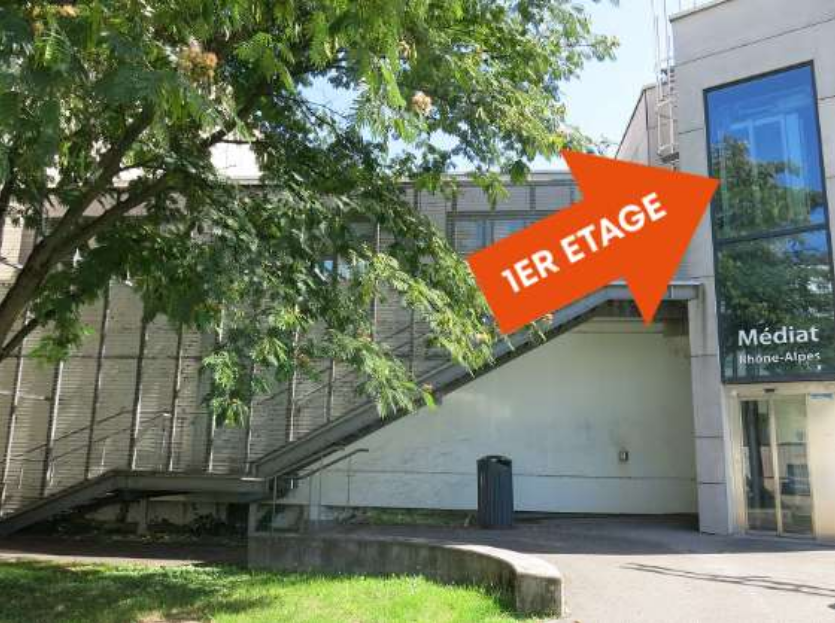
Conference Room – Médiat Rhône Alpes (Google Maps)

The LIDILEM and the Service des Langues are jointly organizing a one-day event on automated assessment of L2 spoken production. This meeting will be an opportunity to present ongoing and future projects and to discuss our research challenges.

The event is open to all, free of charge, and does not require registration. It will be followed by a buffet lunch provided by the Service des Langues and SELF Innovalangues (reservation required before March 31).

Program

📅 Friday, April 11
📍 Conference Room – Médiat Rhône Alpes (Google Maps)
🕒 30 min per speaker (including project presentation & Q&A)

9:00 – 9:30 | Welcome Coffee

🎤 9:30 – 11:00 | Ongoing and Future Projects (1)

  • Sylvain Coulange (LIDILEM/LIG, UGA) – Design and Implementation of a Score Prediction Model for L2 Spontaneous Speech in SELF Placement Test
  • Marco Dinarelli (LIG, UGA) – Presentation of the JANUS Project: Large Multi-modal Language Models for L2 Language Acquisition
  • Tsuneo Kato (SLPL, Doshisha University) – Learning Second Language Expression with Form-Focused Trialogue-Based CALL System

11:00 – 11:30 | Coffee Break

🎤 11:30 – 13:00 | Ongoing and Future Projects (2)

  • Laura Rupp (Centre for Global English, Vrije Universiteit Amsterdam) – Developing an Automated Pronunciation Checker that Assesses the Intelligibility of English Pronunciation
  • Nicolas Ballier (ALTAE, Université Paris Cité) – Whisper for L2 Scoring: From Segmental to Suprasegmental Features
  • Antonio Romano (Lab. di Fonetica Sperimentale “Arturo Genre”, Torino University) – Assessing the Prosodic Components of L2 Speech Using a Chatbot

🍽 13:00 – 14:30 | Lunch Buffet (provided by Service des Langues and SELF Innovalangues – Register Here)
📍 Room Magellan (Google Maps)


Practical Information

📍 Venue & Access

📍 Conference Room – Médiat Rhône-Alpes (Google Maps)

🚆 Access from Train Stations

  • From Grenoble Gares: Take Tram B (25 min) to Université – Condillac (Direction: Gières Plaine des Sports)
  • From Gières Gare – Université: Take Tram B (5 min) to Université – Condillac (Direction: Oxford)

🌍 Remote Participation

We encourage all participants to attend in person, but for those unable to travel to Grenoble, here is a Zoom link  for remote access:

https://univ-grenoble-alpes-fr.zoom.us/j/98433223399?pwd=dZw39oBKqhQltsa5e41bc45QQYr11C.1

Meeting ID: 984 3322 3399

Passcode: 659265

illustration journée

Contact

Sylvain Coulange

sylvain.coulangeatuniv-grenoble-alpes.fr (sylvain[dot]coulange[at]univ-grenoble-alpes[dot]fr) 
Projet C-Maphore

Manipulation de représentations externes pour le développement de la conscience phonémique et l’entrée dans le code écrit en L1 et L2 : vers des outils adaptatifs utilisables en ligne

Formation, Innovation pédagogique

Le projet C-maphore vise à proposer des matériaux pédagogiques innovants pour le développement de la conscience phonémique et l’entrée dans l’écrit en langue maternelle (L1) et langue étrangère (L2), en présentiel et à distance. Il s’agira de tester l’effet 1) de la personnalisation de représentations externes des phonèmes manipulables grâce au numérique et 2) de prototypes d’outils permettant de faire des activités explicites de conscience phonémique et de travailler la conscience phonographémique. Ce projet répond à un besoin de documents pédagogiques exprimé par des enseignants et des orthophonistes, besoin renforcé lors des confinements. L’expérimentation permettra d’améliorer les outils, mais également de récolter des données permettant de mieux comprendre le rôle des représentations externes à la lumière des connaissances sur la cognition (synesthésie, neurones miroirs) et les processus à l'œuvre dans la découverte du système écrit d’une langue.

Financement

ANR Jeunes Chercheuses Jeunes Chercheurs 48 mois, de septembre 2022 à septembre 2026

Laboratoires

ICAR, Université Lyon 2 & LIDILEM, UGA.

Illustration

Membres

Responsable : Émilie Magnat (ICAR, Lyon 2)
Membres : Françoise Boch (MCF, Lidilem), Didier Bottineau (CR CNRS, ICAR), Sylvain Coulange (Doctorant, Lidilem), Yoann Goudin (Lidilem, Paris 7), Mathieu Loiseau (MCF, LIRIS), Matthieu Quignard (IR CNRS ICAR), Coralie Payre-Ficout (MCF, Lidilem), Emmanuelle Prak-Derrington (MCF, ICAR)

PHILEDUC : La philo pour enfants, quand les bottines suivent les babines

Séminaire Culture, Innovation pédagogique Le 26 mai 2021
Complément date

Attention horaire modifié : 15h00-17h00

Complément lieu

Captation de la séance :

bandeau1.jpg

Par Michel Sasseville, professeur titulaire, Faculté de philosophie, Université Laval Québec
Responsable des programmes de formation en philosophie pour enfants

Présentation de l'intervention : La philosophie pour les enfants, telle qu’imaginée par M. Lipman et A. M. Sharp a plus de 50 ans et est présente dans près de 80 pays.  Quels buts poursuit-elle ? Pourquoi un tel engouement ? En quoi pourrait-elle être une révolution copernicienne dans le monde de l’éducation ? Quelles sont les habiletés de penser et les dispositions qu’elle permet de développer ?  Quel est le rôle du dialogue – de la délibération –  dans le développement de ces composantes ? Quels sont les principaux rôles de la personne qui anime une telle pratique ?  Voilà autant de questions et bien d’autres qui seront abordées lors de cette rencontre.

Illustration

DLM - Didactique des Langues et Multimodalité

Formation, Innovation pédagogique

Cette action vise à centraliser les projets du Lidilem qui concernent la multimodalité dans l’apprentissage des langues selon une approche inductive.

Dans la lignée des travaux menés d'une part par Gattegno (1976) et à sa suite Young & Messum (2013) sur le Silent Way, et d'autre part, par Laurent sur la Grammaire en couleur (Laurent, 2014), ces projets visent à aider l'enseignant·e de langue à subordonner son enseignement à l'apprentissage de ses apprenant·e·s. Autrement dit, un des principes forts des projets présentés ici consiste à fournir aux enseignant·e·s les moyens pédagogiques de déclencher chez les apprenant·e·s dont ils ou elles ont la charge des prises de conscience relatives au fonctionnement de la langue cible (L1 ou L2). Elle s’inscrit en parallèle de l’action collective Pédagogies Multimodales, qui organise des séminaires réguliers sur la multimodalité dans l’enseignement des disciplines, de manière plus générale.

legos de couleurs placés les uns à la suite des autres
Crédits - Sylvain Coulange

Membres

Responsables :

francoise.bochatuniv-grenoble-alpes.fr (Françoise Boch )& sylvain.coulangeatuniv-grenoble-alpes.fr (Sylvain Coulange)

Membres du Lidilem

Dan Frost / Laetitia Giorgis / Aurélie Mariscalchi / Chika Ninomiya / Yoann Goudin

Membres hors Lidilem

Alexandre Do / Émilie Magnat

Projets associés

  •        GrammOrtho - Françoise Boch et Claude Ponton

  • ALeM - Sylvain Coulange, Yoann Goudin, Émilie Magnat, Alexandre Do

Partenariats

Publications

EnForme - Formation des enseignants de/en langues

Formation, Innovation pédagogique, Recherche

Cette action s'intéresse aux dispositifs et mesures concrètes mis en œuvre dans la formation initiale et continue des enseignants de/en langues. Le lien entre formation et terrain, la réflexivité, les outils et ressources à mettre à la disposition des (futurs) enseignants et les choix des contenus de formation sont autant de pistes de recherche développées dans l'action EnForme.

Une des particularités de l’action EnForme est qu'elle s'appuie en grande partie sur les expériences des membres en matière de formation d'enseignants, que celles-ci prennent place in situ ou dans des modalités articulant présentiel et distance, en France ou dans d'autres pays, dans le cadre de formations diplômantes ou non. À travers cette action, nos recherches ont pour but de faire évoluer nos manières de faire, de penser de nouveaux dispositifs de formation et de trouver un juste équilibre entre nos intérêts de recherches, les attentes et besoins exprimés par les personnes en formation, et la réalité des terrains.

Les principales orientations de recherche sont les suivantes :

  1. Développement de la réflexivité des (futurs) enseignants. Il s’agit là d’une préoccupation que nous avons en commun, en tant que formateurs d'enseignants, notamment à travers la mise en œuvre d'activités visant à développer et soutenir leur réflexivité. Même si les recherches dans le domaine soulignent certaines limites attachées au modèle du praticien réflexif, nous considérons qu'il peut malgré tout représenter un intérêt (cf. biographie langagière et professionnelle). Dans cette perspective, nous nous questionnons sur les formes d’activités à proposer, sur les objets sur lesquels faire porter la réflexion, et sur les modèles de réflexion à mobiliser.
  2. Exploration de (nouvelles) démarches, méthodes, outils, etc. Former des enseignants consiste également à proposer des approches et ressources et à se demander comment les enseignants en formation se les approprient. Notre intérêt se porte à la fois sur la phase de conception (par exemple à travers l'analyse du matériel pédagogique élaboré par les étudiants) et sur les transformations que subissent ces démarches et ressources lorsqu’elles sont exploitées sur le terrain (en particulier dans le cadre du stage obligatoire).
  3. Lien entre formation et terrain. La formation des enseignants de langues a lieu dans des contextes particuliers : public relevant de la formation initiale et/ou continue, période de stage relativement courte et ne bénéficiant pas toujours d’un tutorat dans la structure d’accueil, besoins de formation différents selon les étudiants (certains se destinent au métier d’enseignant, d’autres à l’ingénierie de formation par exemple), etc. Comment s'effectuent les apprentissages et le développement de compétences ? Quels liens les (futurs) enseignants établissent-ils entre les contenus de formation, les démarches et méthodes auxquelles ils ont été formés et leurs pratiques sur le terrain ? Quels enseignements pouvons-nous, en tant que formateurs d’enseignants, en tirer pour faire évoluer nos propres enseignements et pratiques de formation ? Etc.
  4. Contenus de formation. Sous l'effet de l'évolution des questionnements de recherche en didactique des langues, des changements que l'on observe sur le terrain (publics, objectifs de formation, politiques publiques et linguistiques, etc.), mais aussi du fait des résultats de nos propres recherches, nous nous interrogeons régulièrement sur les notions et approches auxquelles sensibiliser les étudiants, sur les choix à opérer dans une période de formation relativement courte. Afin d'enrichir nos réflexions à ce propos et répondre aux grands enjeux actuels en matière de recherches en éducation, concernant notamment l’interdisciplinarité (cf. Réseau Thématique « Recherches autour des questions d’éducation », dont le Lidilem est membre), nous envisageons de mener des recherches en partenariat avec des laboratoires d'autres disciplines.
Deux visages - un en bleu, l'autre en rouge - s'entrecroisent
Crédits - Shutterstock

Membres

Responsables

Stéphanie Galligani & Thierry Soubrié

Membres du Lidilem

Laura Abou Haidar / Sülün Aykurt / Hajiba Boufroukh / Manon Boucharéchas / Hanna Burrough / Mauricio Cárdenas / Catherine Carras / Charlotte Dejean / Comlan Fantognon / Tidiane  Ferdinand-Keita / Frédérique Freund / Daniel Frost / Dania Ghaddar / Nicolas Gug / Alice Henderson / Dora Loizidou / Catherine Muller / Elke Nissen / Christine Perego / Diana-Lee Simon / Dimitra Tzatzou / Beatriz Villa / Lan Wang

Membre hors Lidilem

Dionnodji Tchaine

évènements

Colloque FORLAV - De la formation linguistique à la formation professionnalisante : nouvelles démarches didactiques en contexte Asie-Pacifique, 24-26 avril 2024, Université de Pédagogie de Hô-Chi-Minh-Ville (Vietnam)
 

Projets associés

  • Feline
  • Co-Former
  • DIFREC – Didactique, Formation de Formateurs, Recherche  (responsables : Catherine Carras & Stéphanie Galligani)

Partenariats

  • RT Education
  • Université de Pédagogie de Hô-Chi-Minh-Ville (Vietnam)

Publications

Références bibliographiques EnForme

Ressources associées

CoPoLangues

Co-clustering pour les tests de Positionnement en Langues

Innovation pédagogique, Recherche

Le projet CoPoLangues est le fruit de la collaboration entre le Lidilem (Innovalangues), le Laboratoire Jean-Kuntzmann (LJK), l'UFR de Langues Étrangères et le Centre Universitaire d'Études Françaises. Il a pour objectif d'exploiter les résultats du test de positionnement SELF avec de nouveaux modèles statistiques pour optimiser l'algorithme du test, analyser les résultats en fonction des profils d'étudiants et permettre la création de groupes d'étudiants plus ou moins homogènes, en analysant leurs patterns de réponses.

lidilem_alpha.png
ljk_alpha.png
logo_ufrle_alpha.png
logo_cuef_alpha.png
Le test SELF, développé dans le cadre de l’IDEFI Innovalangues, est un test de positionnement en langues qui permet de classer le niveau en langues des étudiants selon le Cadre Européen Commun de Référence pour les Langues (CECRL) de A1 à C2. Depuis 2016, plusieurs milliers de passations d’étudiants ont été réalisées dans 6 langues différentes : anglais, italien, japonais, mandarin, espagnol et français langue étrangère (FLE).


Actuellement, les étudiants réalisent un premier test (minitest initial), puis un deuxième qui diffère selon leur niveau au premier test. L’orientation des étudiants vers l’un ou l’autre test de niveau dépend de scores de césure au minitest. Par ailleurs, les concepteurs du test aimeraient pouvoir diminuer le nombre d’items à chaque étape du test pour en diminuer la durée. Le premier objectif de ce projet est d’utiliser des méthodes statistiques de co-clustering, qui permettraient simultanément de définir de nouveaux groupes homogènes d’étudiants et d’identifier les items les moins discriminants. Le second objectif est d’analyser les résultats des étudiants en FLE à ces tests par rapport aux profils des étudiants (langue(s) maternelle(s), nationalités, stratégie d’apprentissage, niveau de langues, ...).


Pour cela, nous proposons de mettre en œuvre le modèle des blocs latents (LBM) et son extension avec classe de bruit (NFLBM, Laclau et Brault, 2018) sur ces données. Nous étudierons également la robustesse de ces modèles au cours des différentes passations.


Pour le second objectif, il s’agirait, dans un premier temps, de mettre en œuvre des tests d’indépendance classiques entre les groupes de niveaux (créés par SELF, LBM ou NFLBM) et les groupes de langues maternelles ou les nationalités. Dans un second temps, nous proposerons des modèles de co-clustering incluant des covariables ou des effets aléatoires pour prendre en compte la variabilité inter-individuelle entre les étudiants, mais aussi l’effet de leur(s) langue(s) maternelle(s).


Le groupe du projet est composé d’enseignants-chercheurs en statistique du LJK et d’enseignants de langues responsables de certains volets du test SELF. Ils ont déjà commencé à collaborer sur ce sujet en encadrant deux projets tutorés. L’obtention du financement IRS leur permettrait de monter en puissance grâce à des stages de master. Il leur donnerait également l’opportunité d’organiser deux workshops à Grenoble pour permettre aux deux communautés statistique et linguistique de se rencontrer et d’échanger sur ces problématiques. Il leur permettrait enfin de diffuser les résultats obtenus lors de conférences et colloques nationaux ou internationaux.

 
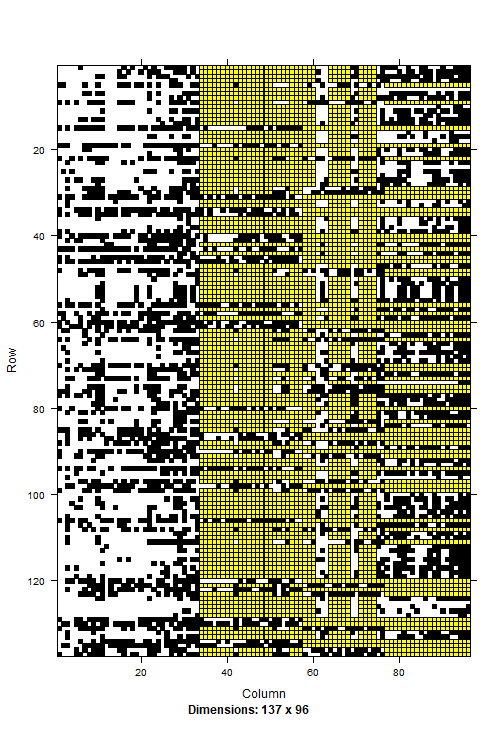
copolangues_self_repondant.png
Aperçu d'une matrice de résultats SELF, constituant la matière première du projet CoPoLangues

Workshop :

Communications :

  • Vincent Brault, Sylvain Coulange, Marie-Pierre Jouannaud, Frédérique Letue, Marie-José Martinez, et al.. Comment former des groupes d'étudiants homogènes à partir des résultats de SELF ? EVAL2019, Oct 2019, Grenoble, France. ⟨hal-02368784⟩
  • Sylvain Coulange, Marie-Pierre Jouannaud. Comment former des groupes d'étudiants homogènes à partir des résultats de SELF ? RANACLES2019, Nov 2019, Aix-en-Provence, France.
  • Sylvain Coulange, Marie-Pierre Jouannaud, Anne-Cécile Perret. Piloting an automatic clustering algorithm to supplement placement test results for large groups of students. ALTE 7th International Conference, Apr 2020, Madrid, Spain.

Publications :

  •  

Membres

LJK
frederique.letueatuniv-grenoble-alpes.fr (frederique[dot]letue[at]univ-grenoble-alpes[dot]fr)

Marie-José Martinez

marie-jose.martinezatuniv-grenoble-alpes.fr (marie-jose[dot]martinez[at]univ-grenoble-alpes[dot]fr)

Vincent Brault

vincent.braultatuniv-grenoble-alpes.fr (vincent[dot]brault[at]univ-grenoble-alpes[dot]fr)


LIDILEM
Sylvain Coulange

sylvain.coulangeatuniv-grenoble-alpes.fr (sylvain[dot]coulange[at]univ-grenoble-alpes[dot]fr)

UFR LE
Marie-Pierre Jouannaud

marie-pierre.jouannaudatuniv-grenoble-alpes.fr (marie-pierre[dot]jouannaud[at]univ-grenoble-alpes[dot]fr)


CUEF
Anne-Cécile Perret

anne-cecile.perretatuniv-grenoble-alpes.fr (anne-cecile[dot]perret[at]univ-grenoble-alpes[dot]fr)

Comlan Fantognon

comlan.fantognonatuniv-grenoble-alpes.fr (comlan[dot]fantognon[at]univ-grenoble-alpes[dot]fr)

Ressources associées

Pédagogies Multimodales - Projets en lien

Formation, Innovation pédagogique

Cette page décrit les principaux projets en lien avec les séminaires Pédagogies Multimodales.

IP-CAFES (InterPhonology : Czech, Arabic, French, English & Spanish) - 2018

IP-CAFES est un projet qui vise à identifier les traits phonétiques et phonologiques dans le discours des non-natifs (des profs qui font de l’EMILE) qui mènent à des problèmes de compréhension et/ou des jugements négatifs sur le locuteur en question. Il s’agit principalement de tests de perception à partir de textes qui seront lus et/ou du discours (semi-spontanés et certains traits seront modifiés avec des logiciels de traitement de la parole. Les résultats nous aideront à mieux cibler les points à aborder lors des formations d’étudiants et de formateurs.

Personnes impliquées : Daniel FROST, Alice HENDERSON, Laura ABOU HAIDAR, Radek SKARNITZL (Charles University, Prague, République Tchèque), Leticia QUEZADA VAZQUEZ (Universitat Rovira i Virgili (URV), Tarragona, Espagne)

La pseudo-synesthésie audition-colorée comme levier pour l’enseignement-apprentissage des langues (ACLEAL) - 2017-présent

Parmi les approches pour l’apprentissage des langues, certaines reposent sur la pluralité des ressources sensorielles et peuvent constituer une aide pour l’amélioration du répertoire phonémique. En considérant la théorie du double codage (Paivio, 1969) et la théorie de l’apprentissage multimédia (Mayer, 2005), ce projet fait l’hypothèse que, grâce à l’association mentale entre un phonème et une couleur, l’écoute du phonème pourrait rappeler la couleur et la vue de la couleur rappellerait la prononciation du phonème. Cela s’apparente à la synesthésie « audition-colorée » qui semble aider la prononciation et l’intonation en langue étrangère (voir Mroczko-Wąsowicz et al., 2013). L’objectif est ici de déterminer si 1) l’audition colorée peut être entrainée pour déclencher une pseudo-synesthésie à l’instar de Colizoli et al. (2012) ; 2) cette pseudo-synesthésie peut aider l’apprentissage de la prononciation de différentes langues étrangères.

Personnes impliquées : Émilie MAGNAT

Laboratoire : CERCLL (Centre d’Etudes des Relations et Contacts Linguistiques et Littéraires, Amiens)

Enseigner l’écrit à l’IUT via un dispositif hybride inspiré de CertiRedac - 2017-présent

Les compétences rédactionnelles peuvent être un point faible des étudiants de DUT, qui ont pourtant besoin de maitriser l’écrit en tant que cadres intermédiaires ou supérieurs. C’est particulièrement vrai pour les bacheliers professionnels, comme ceux accueillis à l’Éneps (École Professionnelle de l’Enseignement Supérieur). 

Une expérimentation didactique a donc été menée auprès d’un groupe d’étudiants de l’Éneps au département Génie Civil & Construction Durable de l’IUT1 de Grenoble. Le dispositif pédagogique utilisé adopte une approche intégrée de l’écrit, en articulant production écrite et travail explicite de la langue. Il est hybride à plus d’un titre, puisqu’il couple l’approche Grammaire en couleurs en présentiel à l’utilisation de la plateforme GrammOrtho en distanciel ainsi qu’au rendu de productions écrites tutorées. Chaque production écrite a ainsi donné lieu à trois versions consécutives, révisées en suivi des modifications par les enseignantes. 

Enfin le CCR (Certificat en Compétences Rédactionnelles) a été utilisé partiellement comme pré-test et post-test pour mesurer le progrès des étudiants et interroger le développement respectif des différentes composantes de leur compétence rédactionnelle.

Personnes impliquées : Maud GIFFARD, Cindy DE AMARALFrançoise BOCH

Laboratoire : LIDILEM

Projet Grammortho - 2016-présent

Le projet GrammOrtho a pour objectif de fournir une plateforme d’apprentissage en autonomie couvrant l’ensemble des besoins en orthographe grammaticale du français et adoptant une démarche inductive, en adéquation avec les recherches actuelles. Répondant à une forte demande sociale (en France et dans la francophonie), ce projet cible d’une part le public étudiant préparant son insertion professionnelle, d’autre part les personnes en situation d’emploi souhaitant monter en compétences à l’écrit.

Les modules GrammOrtho ont été conçus pour un public scolaire (Grammortho, version A) par Maurice et Christiane Laurent, dans le cadre de l’association UEPD (Une Education pour Demain) qui les édite et les diffuse. Le projet consiste à adapter ces modules pour un public adulte (GrammOrtho, version B). Quatre modules ont déjà été adaptés grâce au financement d’un projet de recherche appliqué (CertiRedac). Les six derniers sont financés par un budget Idex Formation, obtenu en janvier 2018, pour trois années. L’ensemble des modules sont testés entre 2018 et 2021 auprès des publics étudiants relevant des 4 composantes impliquées dans le projet (UFR LLASIC, Formation Continue, ESPE, Collège Doctoral), puis seront proposés à un large public d’apprenants, en France et dans tout autre pays francophone.

Personnes impliquées : Françoise BOCH, Florence ALLAUZEN, Sylvain COULANGE, Johanna RODRIGUEZ, Arthur DESOUTTER, Marion HENRI, Luce LAGRANGE, Maud GIFFARD

Contributeurs : Rosanne ZANINI, Rémi CARQUIN

Laboratoire : LIDILEM

Partenaire : UEPD

Lien vers l’application : https://www.uneeducationpourdemain.org/grammortho/

THEMPPO (Thématique prosodie et production orale) - Innovalangues - 2014-présent

La prosodie est la manifestation orale du lien entre le corps et la voix dans un contexte langagier. Elle apparaît comme un élément fondamental de la compréhension, de l’intelligibilité et de la confiance en soi dans une situation de communication. Or une des défaillances souvent pointées dans les formations en langues est la place réduite accordée à une correcte prise en compte de l’importance de la prosodie et de la dimension multimodale qu’implique toute expression et interaction orales impactant ainsi la qualité de la production orale. A cela vient s’ajouter un manque de moyens de stimuler et d’évaluer, sur un plan formatif, les apprentissages de cette dimension fondamentale du langage. Confrontés à une dimension qu’ils n’ont souvent pas appris à connaître et qu’ils peuvent difficilement expliquer, les enseignants privilégient alors tout naturellement l’écrit, plus individuel, plus cadré. L’équipe THEMPPO (THEMatique, Prosodie et Production Orale), qui évolue depuis 2013 dans le cadre du projet IDEFI Innovalangues (2012-2019), se propose, en réponse à ce manque, de forger des instruments donnant accès à une meilleure connaissance, intégration et transmission de la prosodie. Il s’agit pour THEMPPO également de partager ces instruments auprès de la communauté d’enseignants de langues de l’Enseignement Supérieur - et au-delà.

Ils fondent leur recherche pédagogique sur deux approches complémentaires : l’expérience silencieuse et le corps engagé qu’ils mettent en application dans des formations de formateurs. Ces approches permettent d’atteindre deux objectifs principaux : fournir aux enseignants de langues (et principalement d’anglais) des ressources pour améliorer la qualité de leur « présence » face aux étudiants d’une part et suggérer des pistes originales pour travailler la production orale en investissant la dimension corporelle du langage, en lien avec la prosodie, d’autre part. Un enjeu majeur sera ensuite de parvenir à conserver et transposer cette conscience du corps et de la voix dans une formation en ligne grâce à des vidéos-activités.

Personnes impliquées : Christopher MITCHELL, Marieke DE KONING, Avril TREILLE, Rebecca GUY

Projet porteur : Innovalangues

Lien vers la page info : https://innovalangues.univ-grenoble-alpes.fr/former-et-se-former/themppo/

Kinéphones - 2014-2015

L’outil propose une approche multimodale de la phonétique qui prend en compte des approches anciennes telles que l’approche Gattegno ou la méthode Borel Maisonny. Les phonèmes sont représentés par le signe phonétique, par une couleur ou par un geste. Cet outil s’adresse à des professeurs des écoles ou des formateurs en langue maternelle et étrangère. Dans le cadre d’une recherche-développement, nous menons des recherches complémentaires sur 1) l’effet de l’utilisation de l’outil sur le développement du répertoire phonémique ; 2) l’encodage en mémoire de différentes représentations et la provocation de la synesthésie pour l’apprentissage et 3) l’apprentissage d’une langue étrangère, pour l’entrée dans l’écrit en langue maternelle et étrangère.

Personnes impliquées : Jean-Marc COLLETTA, Emilie MAGNATDaniel FROST, Yoann GOUDIN, Françoise BOCH, Solange ROSSATO, Monica MASPERI

Laboratoires : LIDILEM, LIG

Lien vers la page info : https://kinephones.hypotheses.org/

Lien vers l’application : http://dlm.univ-grenoble-alpes.fr/kinephone/


Pédagogie multimodale en contexte ASL - 2018

Actuellement en stage à l’ODTI (Observatoire sur les Discriminations et les Territoires Interculturels), en contexte ASL. Le projet est de concevoir une démarche de formation de formateurs basée sur une pédagogique multimodale fondée sur Silent Way avec une conscientisation phonologique de l’entrée dans une langue étrangère en turc. Ce projet se fera en deux étapes. La première étape est créer un atelier d’expérimentation en trouvant le point de rencontre entre la démarche ASL et le Silent Way qui sont deux "esprits" d’enseignement opposés. Cette expérimentation ouvrira ensuite sur la formation de formateurs qui sera le projet d’une éventuelle thèse, en construisant un panneau de sons en langue Turque.

(Les ASL sont des ateliers de Français animés en majorité par des bénévoles à destination d’un public migrant. Les objectifs de ces ateliers sont d’apporter aux apprenants une autonomie dans les espaces publics de la société française. Ainsi pour l’être, la langue devient un moyen de devenir un acteur social dans la société d’accueil.)

Personnes impliquées : Güler Yildirim (M2 Didactique des Langues FLES (UGA))

Laboratoire : LIDILEM

Organisme d’accueil : ODTI

Pédagogies Multimodales

Formation, Innovation pédagogique

L'activité collective "Pédagogies Multimodales" a pour objectif de réunir les différents praticiens et chercheurs qui travaillent sur ou avec des pédagogies multimodales.

Ces pédagogies ont pour caractéristique d’impliquer les différents sens de l’apprenant pour l’aider dans son acquisition de la langue. La présente page se propose de centraliser les différents projets en cours ou passés, en relation avec ces pédagogies, afin de mieux comprendre les processus cognitifs en jeu et d’alimenter la réflexion didactique. Nous indiquerons également un certain nombre de sources jugées particulièrement intéressantes.

Cette activité collective est rattachée à l'action de recherche Didactique des Langues et Multimodalité.

Enregistrements vidéo des derniers séminaires

17 décembre

Françoise Boch 

Grammaire en Couleur pour public hétérogène, FLE

28 janvier

Marc Boudot, Angéline Plénard

Présentation d'Enthousiasme Orthographique

25 février

Christophe Stang

Grammaire en Couleurs: Propositions Subordonnées Relatives

Calendrier 2025-2026

Cette année, nos séminaires prennent la forme de courtes formations. Leur objectif est d'aborder un sujet spécifique en proposant une méthode adaptée à un contexte donné. Les formations durent 2 à 3 heures et sont organisées en présentiel uniquement. Comme les années précédentes, un stage d'immersion de 5 jours à la pédagogie Gattegno est proposé début janvier. Nous vous y attendons nombreux !
 

Date 

Horaires

Thématique

Intervenants

Modalité

21 octobre

10h30 - 12h30

Multimodalité pour l'apprentissage du castillan à l'université

Emmanuelle Eggers


Présentiel

4 novembre

13h30 - 16h30

Remédiation phonologique en anglais avec le Silent Way

Alex Carr

Présentiel

26 novembre

13h30 - 15h30

Grammaire en Couleur pour FLM (dont prof. d’école)

Raphaëlle Alexandre

Présentiel

17 décembre

13h30 - 15h30

Grammaire en Couleur pour public hétérogène, FLE

Françoise Boch 

Présentiel

5-9 Janvier

Stage intensif 4 jours et demi 

(lundi 13h30-18h00, puis 9h00-17h00 de mardi à vendredi)

Stage Premier contact Silent Way et pédagogie GATTEGNO Édition 2026 (4.5 jours)

Aurélie Mariscalchi, Alexandre Georges, Yoann Goudin

en collaboration avec le Centre Des Langues et Aster Formation

Présentiel

20 janvier

13h30 - 16h30


Noter les sons / entrer dans l'écrit : qu'est-ce que le trait-point? (mandarin et FLE langues de cas) NB: la participation au stage Premier Contact Silent Way est fortement recommandée

Yoann Goudin

Présentiel

28 janvier

13h30 - 15h30

Présentation d'Enthousiasme Orthographique

Marc Boudot, Angéline Plénard

Hybride

25 février

13h30 - 16h30

Grammaire en Couleurs: Propositions Subordonnées Relatives

Christophe Stang

Hybride

29 avril

13h30 - 16h30

Expérimenter la Méthodologie Intégrée Accélérative (AIM)

Wendy Maxwell

Hybride


Série d'ateliers Silent Way pour la prononciation en anglais

Après le succès du premier atelier de novembre, le Service des Langues de l'UGA organise cinq nouveaux ateliers de prononciation en anglais avec Alex Carr ! Vous pouvez vous inscrire à un ou plusieurs ateliers de votre choix :

  • 📅 Mardi 13 janvier 2026  -  9h00 - 12h00
  • 📅 Mardi 13 janvier 2026  -  13h30 - 16h30
  • 📅 Vendredi 27 février 2026  -  9h00 - 12h00
  • 📅 Vendredi 27 février 2026  -  13h30 - 16h30
  • 📅 Lundi 4 mai 2026  -  9h00 - 12h00

Les ateliers sont gratuits et ouverts à tous, mais sur inscription ! Rendez-vous sur la page dédiée.

News Letter du séminaire :

Cliquez ici pour vous inscrire à notre liste de diffusion !


Évènements à venir :

Mercredi 29 avril (13h30-16h30) - Expérimenter la Méthodologie Intégrée Accélérative (AIM, W. Maxwell)

Évènements passés :

Mercredi 25 février (13h30-16h30) - Grammaire en couleurs : les propositions subordonnées relatives (C. Stang)

Mercredi 28 janvier (13h30-15h30) - Présentation d'Enthousiasme Orthographique (A. Plénard & M. Boudot)

Mardi 20 janvier (13h30-16h30) - Noter les sons / entrer dans l'écrit : qu'est-ce que le trait-point? (Y. Goudin)

Stage Premier contact Silent Way et pédagogie GATTEGNO Édition 2026 (4.5 jours)

Mercredi 17 décembre (13h30 - 15h30) - Grammaire en Couleur pour public hétérogène, FLE (F. Boch)

Mercredi 26 novembre (13h30-15h30) - Grammaire en Couleur pour FLM (R. Alexandre)

Mardi 4 novembre (13h30-16h30) - Remédiation phonologique en anglais avec le Silent Way (A. Carr)

Mardi 21 octobre (10h30-12h30) - Multimodalité pour l'apprentissage du castillan à l'université (E. Eggers)

Mercredi 2 juillet (14h30-16h30) - Utilisation des réglettes de Cuisenaire pour l'apprentissage de la lecture/écriture (A. Thévenet)

Mercredi 9 avril (14h30-17h30) - Dispositif engageant et multimodal pour enseigner la grammaire à l’université : freins et résistances & Corriger un énoncé avec les doigts : impact d’une technique multimodale pour l’enseignement-apprentissage du français langue étrangère (A. Mariscalchi)

6-10 janvier 2025 - Stage Premier contact Silent Way et pédagogie GATTEGNO Édition 2025

4 juin 2024 (9h30-16h30) - Atelier sur la notion de "leçon 0" et la pratique de l'approche Silent Way pour entrer dans l'apprentissage d'une langue étrangère (A. MARISCALCHI, Y. GOUDIN, C. MULLER)

10 avril 2024 (15h30-17h30) - Séminaire Pédagogies Multimodales - Titre à venir (A. ROUSSE-MALPAT)

15-19 janvier 2024 - Stage Premier contact Silent Way et pédagogie GATTEGNO Édition 2024

29 novembre 2023 (16h-17h15) - CAFÉ ALeM n°10 - La Lecture En Couleurs (E. CHASTRUSSE, C. GINHOUX)

22 novembre 2023 (16h-17h15) - CAFÉ ALeM n°9 - Enseigner auprès de E.A.N.A (L. GIORGIS)

27 septembre 2023 (16h-17h15) - CAFÉ ALeM n°8 - Opération Enthousiasme Orthographique (M. BOUDOT)

28 juin 2023 (16h-17h) - CAFÉ ALeM n°7 - Apprendre à lire avec ÉCRILU (C. SAUVAGEOT, J. DELACOUR)

22 février 2023 (15h30-17h30) - Séminaire "Quelles pistes et quels outils mobiliser pour aider des apprenants en difficultés de lecture ?" (A. THEVENET)

18 janvier 2023 (15h30-17h30) - Séminaire "Le silence de l’enseignant dans l’approche Silent Way : bénéfices, limites et paradoxe en contexte d’enseignement-apprentissage du français auprès d’adultes migrants" (A. MARISCALCHI)

12 octobre 2022 (16h-17h) - CAFÉ ALeM-APP n°1 - Partages d'expérience d'utilisation des applications ALeM

26 octobre 2022 (16h-17h) - CAFÉ ALeM n°6 - Présentation d'un outil de communication alternative basé sur une approche syllabique (P. GÉHANT)

10-14 janvier 2022 - Stage premier contact Silent Way et pédagogie Gattegno" (Y. GOUDIN, A. MARISCALCHI, F. BOCH)
Stage gratuit de 4 jours, sur inscription

24 novembre 2021 - Séminaire "L'entrée dans l'écrit des jeunes adultes et adultes via leurs besoins du numérique" (C. BURGET)

23 juin 2021 (15h30-17h30) - Séminaire: L'apport de la multimodalité en correction phonétique : l'exemple de la MVT (C. ALAZARD-GUIU)

26 mai 2021 (16h-17h) - CAFÉ ALeM - Vers une corporéisation de l’enseignement de la prononciation en LE (S. COULANGE, Y. GOUDIN)

3 mars 2021 (16h17h) - CAFÉ ALeM - Discussion autour d'outils numériques pour travailler l'oral en classe de langue (D. FROST, J.-Y. PETITGIRARD)

3 décembre 2020 (12h15-13h15) - CAFÉ ALeM - L'encodage des traits phonétiques pour les tableaux de phonèmes (Y. GOUDIN)

4 novembre 2020 (17h-18h) - CAFÉ ALeM - Trucs et astuces en distancialisation (Y. GOUDIN)

14 octobre 2020 - Des outils numériques multimodaux pour l'apprentissage des langues (F. BOCH, S. COULANGE, A. DO, Y. GOUDIN, E. MAGNAT)

1er octobre 2020 (12h15-13h15) - CAFÉ ALeM - La spatialité dans les outils Gattegno (É. MAGNAT)

11 mars 2020 - Séminaire Le corps et la voix (C. GACHIGNARD, D. FROST)

15 janvier 2020 - Séminaire de Mathématiques "Entrer dans l’étude des fractions… et continuer…" (M. LAURENT)

18 décembre 2019 - Séminaire "Travailler la syntaxe en pédagogie multimodale - l'exemple du pronom relatif" (A.-M. DUMONT, F. BOCH)
Accéder à la page de ce séminaire

11 septembre 2019 - Séminaire LUCIOLE (C. PAYRE-FICOUT, M. LOISEAU, É. MAGNAT)
Accéder à la page de ce séminaire

22 mai 2019 - Table Ronde des Séminaires Pédagogies Multimodales
Accéder à la page de ce séminaire

16 janvier 2019 - Séminaires "Le Silent Way en contexte ASL" (G. Yıldırım) suivi de "Mobiliser la musique pour enseigner l'anglais" (R. GUY)
Accéder à la page de ce séminaire

22 novembre 2018 - Séminaire "Phonocolor, aide à la compréhension de la deuxième articulation du langage" (Y. ERARD, S. ZENGER)
Accéder à la page de ce séminaire

4 juillet 2018 - Séminaire "De l’encodage phonologique à la conscience phono-graphémique" (A. DO, C. DE AMARAL, M. GIFFARD)
Accéder à la page de ce séminaire

14 juin 2018 - Séminaire THEMPPO (C. MITCHELL, M. DE KONING, A. TREILLE, R. GUY)
Accéder à la page de ce séminaire

23 mai 2018 - Séminaire Grammortho (Luce LAGRANGE, Françoise BOCH)
Accéder à la page de ce séminaire

26 avril 2018 - Séminaire des doctorants (Aurélie MARISCALCHI & Noreen LE PAGE)
Accéder à la page de ce séminaire

15 mars 2018 - Premier séminaire "Pédagogies Multimodales"

Crédits photo : © Kotonoha (Chika Ninomiya)

Pédagogies Multimodales

Actualités

Contacts

Aurélie Mariscalchi
aurelie.mariscalchi-filliatreatuniv-grenoble-alpes.fr (aurelie[dot]mariscalchi-filliatre[at]univ-grenoble-alpes[dot]fr)

Sylvain Coulange
sylvain.coulangeatuniv-grenoble-alpes.fr (sylvain[dot]coulange[at]univ-grenoble-alpes[dot]fr) 
Françoise Boch
francoise.bochatuniv-grenoble-alpes.fr (francoise[dot]boch[at]univ-grenoble-alpes[dot]fr)

S'inscrire à la news-letter du séminaire

Cliquez ici pour vous inscrire à notre liste de diffusion !

S'abonner à Innovation pédagogique